Paid Social & Search
How I plan, launch, and scale Meta and Google campaigns that turn ad spend into predictable revenue.
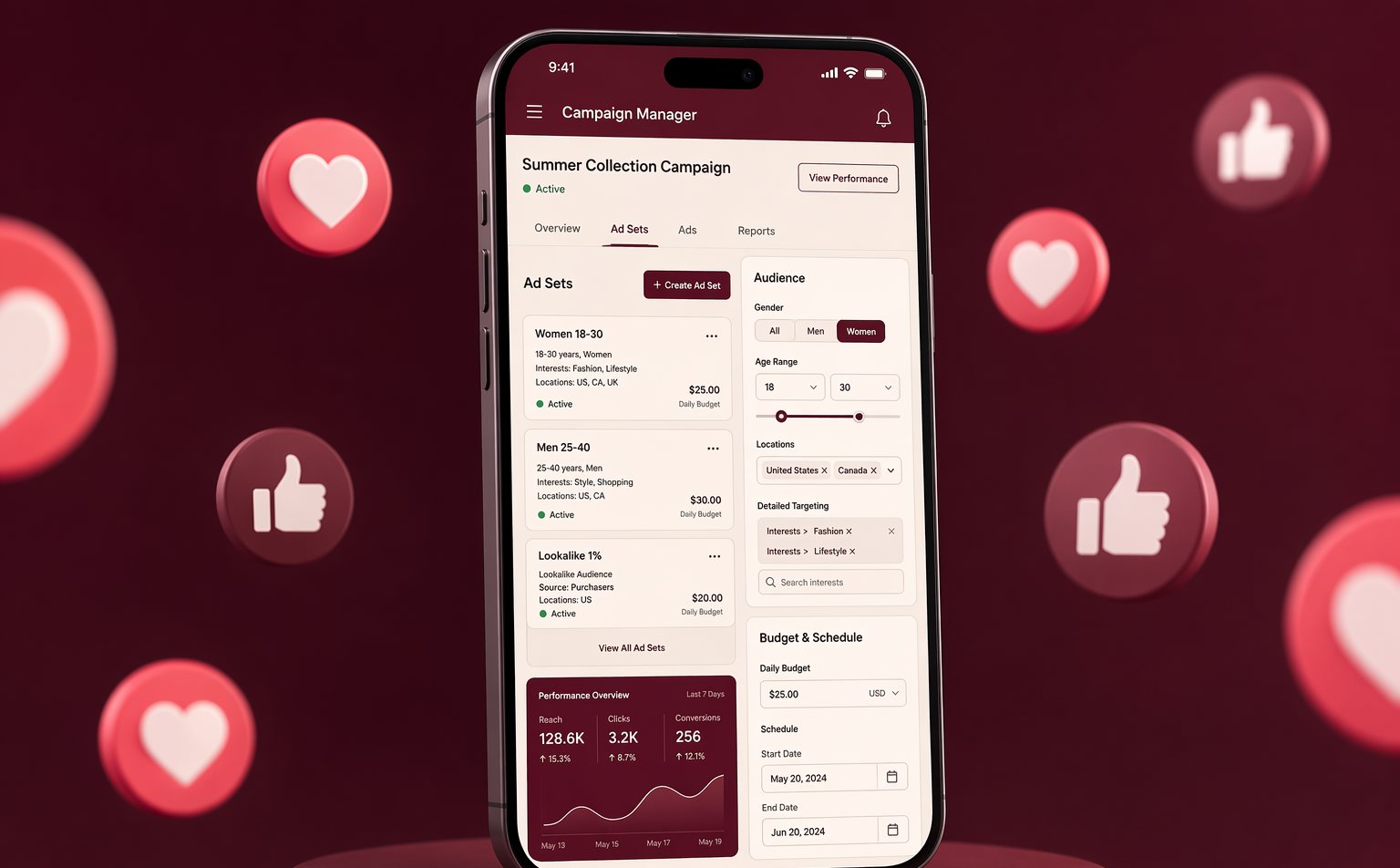
Meta Ads Manager — the engine room
Everything starts inside Meta Ads Manager, but the difference between burning budget and scaling profitably is structure. I build accounts in clean layers: one campaign per objective, ad sets per audience type, and 3–5 creative variants per ad set — so Meta's algorithm always knows exactly what to optimise for and I always know exactly what worked.
Budgets are controlled at the campaign level with clear scaling rules: when an ad set holds target ROAS for 4+ days, budget goes up 20–30%. When CPA drifts, it gets paused — no emotional decisions, only data.
Real example — UK Fish & Chips chain
Instead of one national campaign, each branch got its own campaign with a 5-mile radius audience. Result: +42% local delivery orders and a 28% lower cost per order, because every pound was spent only on people who could actually buy.
Advantage+ Catalog — automated selling for e-commerce
For online stores, Advantage+ Shopping campaigns let Meta's AI find buyers across your entire product catalog automatically. I feed it a clean product feed, strong lifestyle imagery, and set guardrails (like capping how much budget goes to existing customers) so the automation hunts new buyers instead of taking credit for people who would have purchased anyway.
Real example — Herbonic e-commerce store
Advantage+ Catalog campaigns with UGC-style creative hit a 4.2x peak ROAS and cut cost per acquisition by 38% — the algorithm found buyers we would never have targeted manually.
Custom Audiences & Lookalikes — targeting that compounds
Custom Audiences let me re-engage people who already know the brand: website visitors, video viewers, Instagram engagers, and past customer lists. Lookalike Audiences then find new people who behave like your best customers — this is how a small local customer list becomes a scalable acquisition channel.
- Customer list → 1% Lookalike = highest-quality cold traffic
- Video viewers (50%+) → warm retargeting pool that costs pennies
- Past purchasers excluded from prospecting = zero wasted spend
Google Ads — capturing demand that already exists
Meta creates demand; Google captures it. I run Search campaigns on high-intent keywords (e.g. 'fish and chips delivery near me', 'buy herbal supplements UK') so the brand appears at the exact moment someone is ready to buy, supported by Display remarketing that follows warm visitors across the web.
Real example — Red Bull (US internship)
Auditing Google Search & Display spend and refining keywords, ad copy and landing paths helped regional teams surpass quarterly conversion goals — same budget, better aim.
What this means for your brand
A paid media system where every platform has a job: Meta finds new buyers, Google captures ready demand, and ROAS rules decide where the next pound goes.
Discuss Your Project